Mortgage rates fall to 6.23% in Spring 2026, a 3-year low. Driven by falling inflation & Fed policy shifts. Buyers save up to $338/month. Best time to buy in years.
If you have been waiting to buy a house and saying, "Maybe next year," here is some good news: the market is ready for you.
Mortgage rates fall to 6.23%, the lowest level in three spring seasons.
If you are buying your first home, making an investment, or thinking about refinancing, this is an important time to notice.
Let’s break down exactly what’s happening, why it matters, and most importantly, what you should do about it.
What Does It Mean When Mortgage Rates Fall?
When mortgage rates go down, borrowing money to buy a home becomes less expensive.
It's like getting a discount at your favorite store. But instead of saving money on a jacket, you could save a lot of money over the years of your loan.
A mortgage rate is the interest charged by lenders on home loans. It directly influences:
Your monthly payment at lower rates = lower payments
Total interest paid, a 1% difference on a $400,000 loan can mean $80,000+ in savings over 30 years.
With your purchasing power at lower rates, you qualify for a larger loan with the same income.
Overall, housing demand means more buyers can afford to enter the market.
Today, mortgage rates are at 6.23% for a 30-year fixed mortgage. This shows a clear drop from the 7.5% to 8% rates seen in 2023 and early 2024.
For buyers who’ve been waiting, this is exactly the window they were hoping for.
Why Are Mortgage Rates Dropping in 2026?
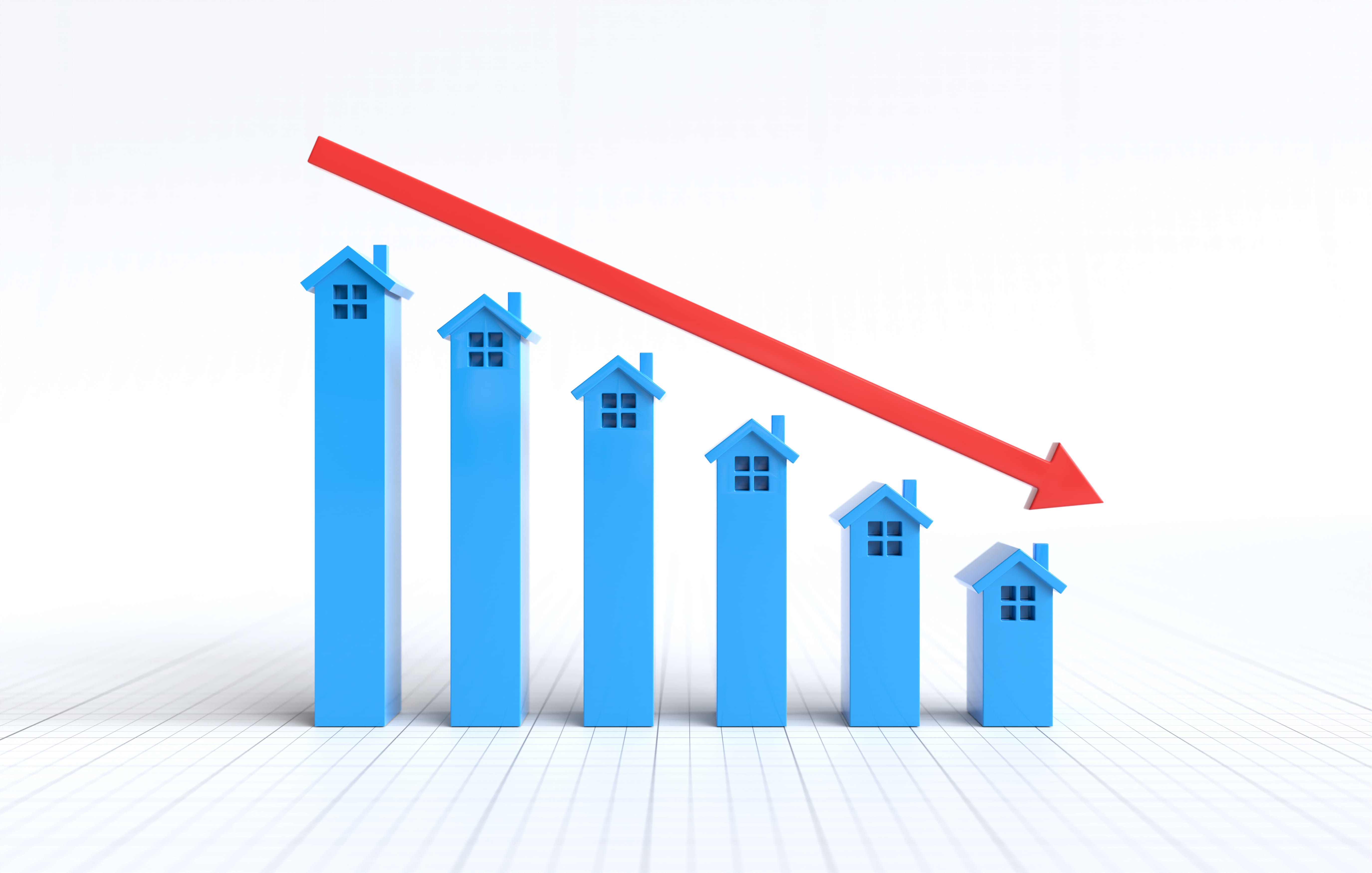
Great question. Rates don’t fall out of the sky; there’s always a story behind the numbers. Here’s what’s driving this welcome decline:
1. The Federal Reserve’s Shifting Stance
The Federal Reserve has been threading a very delicate needle.
After raising rates quickly from 2022 to 2024 to control high inflation, the Fed is now taking a more relaxed approach.
With the federal funds rate being eased, mortgage lenders have responded by trimming their own rates in kind.
The Fed does not directly set mortgage rates. However, it affects the bond market, especially the 10-year Treasury yield. This yield is closely related to fixed mortgage rates.
2. Cooling Inflation (Finally)
The Consumer Price Index (CPI) has continued its downward trend into 2026.
Inflation was a problem, reaching over 9% in mid-2022. Now, it is around the Fed's target of 2 to 3%.
When inflation cools, bond yields stabilize or fall, which allows the lowest mortgage rate environments to emerge.
3. Freddie Mac and Fannie Mae Data Reflect Market Confidence
Both Freddie Mac Freddie Mac and Fannie Mae, a government-backed company that supports most U.S. mortgages, have said that the secondary mortgage market is stabilizing. The weekly Primary Mortgage Market Survey (PMMS) showed that the average rate for 30-year fixed loans is 6.23%. This is the lowest rate since spring 2023.
4. Slower Economic Growth Signals
While not a recession by definition, GDP growth has moderated in early 2026.
When the economy slows down, people need less money for investments. This lowers interest rates, including mortgage loan rates today.
How This Impacts Buyers, Sellers, and Investors

Not everyone experiences a rate drop the same way. Here’s how each group is affected:
For Homebuyers: A Window Is Open
For buyers, a fall in mortgage rates = buying power unlocked. A household that qualified for a $380,000 home at 7.5% may now qualify for roughly $420,000 at 6.23% with the same monthly budget. That’s a meaningful jump.
First-time buyers stand to benefit the most. In 2023-2024, many people could not afford homes. However, current interest rates and slightly lower home prices in some areas make it a good time to buy.
For Sellers: Demand Is Returning
Lower rates bring more buyers into the market. More buyers mean more competition for listings, which helps sellers maintain pricing power.
If you were unsure about selling your home because you thought the market would be slow, the spring home-buying season of 2026 looks like it will be the busiest in three years.
For Real Estate Investors: Refinancing Opportunities Emerge
Investors who acquired properties at higher rates in 2023–2024 are now evaluating refinance options. Dropping from 7.5% to 6.23% on a $600,000 investment property could reduce annual interest expense by $7,620 that goes straight to cash flow.
Case Study: Real Numbers, Real Savings
Meet David and Sara Chen. They are a couple from Austin, Texas. In October 2024, they got pre-approved for a mortgage with a rate of 7.75% for a home that costs $420,000.
They decided to wait, preferring to rent another year rather than lock in what felt like a painful rate.
Fast forward to April 2026. With mortgage rates falling, news dominating headlines, and rates now at 6.23%, they revisited their numbers.
By waiting and watching rates closely, David and Sara are saving $338 each month. They will pay $121,680 less in interest over the whole time of their loan.
That’s a college fund, a retirement boost, or a very nice second property down the road.
Their lesson? Timing isn’t everything, but in mortgage markets, it’s a lot.
Mortgage Rate Comparison Table: Then vs. Now
*Monthly payments based on a $336,000 loan (principal and interest only).
How to Take Advantage During the Spring Homebuying Season
Spring is already the most competitive time in real estate. Add falling rates into the mix, and you’ve got a market that rewards the prepared. Here’s your playbook:
Step 1: Get Pre-Approved Immediately
Don’t window shop with yesterday’s rate. Lenders issue pre-approvals based on mortgage rates today, so locking in your approval now gives you a baseline to work with.
Step 2: Consider a Rate Lock
If you’re actively shopping, ask lenders about rate lock periods (typically 30–60 days).
It is unclear if mortgage rates will drop more. Choosing to lock in at 6.23% today might be a better choice than hoping for a lower rate of 6.0% in two months.
Step 3: Reassess Your Budget With Updated Numbers
Run new calculations. If you pre-qualified at 7%+ previously, your qualifying amount has almost certainly increased. Talk to your lender about refreshing your pre-approval letter.
Step 4: Target Move-In Ready Homes
In a spring homebuying season this hot, bidding wars will be back. Focus on move-in ready properties to reduce closing delays, which can cause rate locks to expire.
Step 5: Don’t Overextend Because You Can
Lower rates increase your maximum loan amount, but that doesn’t mean you should borrow the maximum. Stick to a monthly housing cost that’s 28–30% of gross income. Financial breathing room is priceless.
Expert Insights: What the Pros Are Saying
Industry analysts and economists are cautiously optimistic:
Freddie Mac economists say that when rates stay below 6.5%, more buyers usually come back to the market. They are paying close attention to this situation.
Fannie Mae’s Housing Forecast team projected in Q1 2026 that mortgage rates are expected to go down a little by mid-year, possibly reaching 6.0% by the third quarter. However, experts warn that world events and changes in the job market could change this trend.
Housing experts believe that the spring home-buying season in 2026 will be very busy. This is due to lower interest rates and more Millennials reaching the age to buy homes.
The consensus? Act thoughtfully, but act.
Understanding Today’s Housing Market Inventory Challenges
Even as mortgage rates fall and buying power improves, inventory remains a persistent constraint in the housing market.
The U.S. is believed to need 1.5 million to 4 million more homes. This number can change based on how it is calculated.
The shortage happened because not enough homes were built over the ten years after the 2008 financial crisis. This means that even with lower rates, it is not completely a buyer's market.
What buyers can expect: more competition in popular neighborhoods, quicker sales, and in many areas, prices that stay steady even with lower rates. Spring is a busy time for home buying. There are many buyers, but not enough homes to sell. This situation gives an advantage to sellers in popular areas, even though getting loans is becoming easier.
Smart buyers in 2026 are looking beyond their usual areas. They are checking out new neighborhoods. They are also working with agents who know about exclusive listings. Inventory is the chess piece most buyers forget. Don’t make that mistake.
How Inflation Trends Are Shaping Mortgage Loan Rates Today

The relationship between inflation and mortgage loan rates today is about as direct as it gets in economics. Lenders price risk and inflation is one of the biggest risks to the real value of a loan repaid over 30 years. When inflation is high, lenders demand higher rates to ensure the money they get back has meaningful purchasing power. With CPI data consistently printing near or below 3% in early 2026, lenders are more comfortable offering competitive rates.
The bond market, which heavily influences fixed mortgage rates, has also responded positively to easing inflation data. The 10-year Treasury yield, a key benchmark, has pulled back from its 2023 highs, giving lenders room to offer rates in the low-to-mid 6% range.
For borrowers, this is a benefit of inflation. After years of economic struggle, they finally see a real advantage when applying for a mortgage.
The Role of the Federal Reserve in Mortgage Rate Movements
Many people know that the Federal Reserve sets interest rates. However, not as many understand how those decisions affect the economy. The Fed controls the federal funds rate, which is the overnight lending rate between banks. This indirectly influences all forms of borrowing, including mortgages. When the Fed raises rates, borrowing becomes expensive across the board. When it cuts or holds, mortgage markets tend to stabilize. Mortgage rates are also influenced by expectations about inflation, job data, and the Treasury bond market. Sometimes, they change even before the Federal Reserve makes official decisions, based on what people think will happen with policies.
In 2026, the Fed's careful approach and signs of steady interest rates have made the bond market feel secure. This confidence has led to the lowest mortgage rates we are seeing this spring.
Why the 30-Year Fixed Mortgage Still Dominates
In a world of different loans, the 30-year fixed mortgage is still the most popular choice in America. There are good reasons for this. It offers predictability; your rate and payment stay fixed regardless of where mortgage loan rates go next month, next year, or next decade.
For buyers entering the market as mortgage rates fall, the 30-year fixed is particularly attractive. Locking in 6.23% now protects against any future rate increases while keeping monthly payments manageable. Fannie Mae and Freddie Mac support 30-year loans that meet certain standards. This helps lenders offer better prices, making these loans available to many borrowers.
The 15-year fixed mortgage is a good choice for people who can afford higher monthly payments. It helps you build equity faster and pay much less interest. For most first-time buyers, though, the 30-year fixed remains the anchor of the spring homebuying season strategy.
Frequently Asked Questions (FAQs)
1. Why did mortgage rates fall in spring 2026?
Mortgage rates dropped in spring 2026. This was due to slower inflation, a less strict Federal Reserve policy, and stable 10-year Treasury yields.
As the CPI data moved closer to the Fed's 2-3% target and economic growth slowed down, bond markets became more stable. Lenders then offered lower mortgage rates because of these savings.
2. What are mortgage rates today for a 30-year fixed loan?
As of spring 2026, the average rate for a 30-year fixed mortgage is 6.23%, based on Freddie Mac's survey. This is the lowest rate in three spring seasons.
Rates vary by lender, credit score, loan type, and down payment, so individual offers may differ.
3. Will mortgage rates go down further in 2026?
Fannie Mae and housing experts predict that mortgage rates may go down a bit until mid-2026. They might reach around 6.0% by the third quarter.
However, this is not certain. Any changes in inflation data, Federal Reserve actions, or world economic conditions could stop or change the trend.
4. How much can I save if mortgage rates fall by 1%?
On a $336,000 30-year fixed mortgage, a 1% rate reduction saves approximately $200–$220 per month and roughly $72,000–$80,000 in total interest over the life of the loan. Even a 0.5% reduction can mean thousands of dollars in annual savings.
5. Is the spring homebuying season of 2026 a good time to buy?
Yes, many buyers find that low mortgage rates and good home choices make spring 2026 a good time to buy.
That said, buyers should assess their personal financial readiness, local market conditions, and long-term stability before committing.
6. Should I lock my mortgage rate now or wait for rates to fall further?
Rate lock decisions depend on your timeline and risk tolerance. If you’re under contract or actively shopping, locking at 6.23% provides certainty. Waiting for a potentially lower rate risks missing the right home or seeing rates reverse.
Most mortgage experts suggest locking in your rate when you find one you like, especially if you are 60 days or less from closing.
7. How do Freddie Mac and Fannie Mae influence mortgage loan rates today?
Freddie Mac and Fannie Mae buy home loans from banks and lenders. This helps those lenders get money to give out new loans.
Their willingness to buy loans at competitive rates directly enables lenders to offer lower mortgage loan rates today. When these GSEs signal confidence in the market, rates tend to stabilize or decrease.
Conclusion: Your Move, Buyer
The message from the housing market in spring 2026 is clear and positive: mortgage rates have dropped to 6.23%. This is the lowest rate in three years, and there are good opportunities available.
The Federal Reserve has made some careful changes. Inflation is getting better. Plus, spring is a busy time for homebuying. Because of these factors, it’s a good moment for buyers who have waited.
Is it the perfect market? No inventory is still tight, and competition is returning. But as far as financing costs go, this is the best window most buyers have seen in years.
Here’s what to remember:
Get pre-approved with updated mortgage rates today.
Run your numbers with a 6.23% baseline.
Consider rate locks if you’re actively shopping.
Don’t wait for “perfect”; good enough right now beats perfect in theory.
The spring homebuying season waits for no one. And neither does a rate this good.
Stay informed about mortgage rates and housing trends today. Save this guide, share it with someone who is waiting for the right time, and move forward with confidence.
Your future home isn’t going to buy itself.