Conventional Loan Down Payment choices may be easier than you think. Explore low down payment paths, compare options, and apply with confidence today.
A Conventional Loan Down Payment does not always have to be 20 percent. Some qualified buyers may have lower down payment options, but the right amount depends on credit profile, income, property type, occupancy, loan amount, PMI, closing costs, lender guidelines, and current program rules.
If you are buying a home in Oklahoma or the Tulsa area, Madrid Mortgage Team can help you compare your options before you assume one loan path is best. Current conventional loan guidance should always be verified before publishing or applying because agency rules, loan limits, and lender requirements can change. For a general overview, the CFPB explains conventional loan basics for home buyers.
Many buyers focus only on the down payment. That is understandable, but the full home buying budget also includes closing costs, cash to close, private mortgage insurance, prepaid taxes, insurance, escrow setup, possible reserves, and monthly payment comfort.
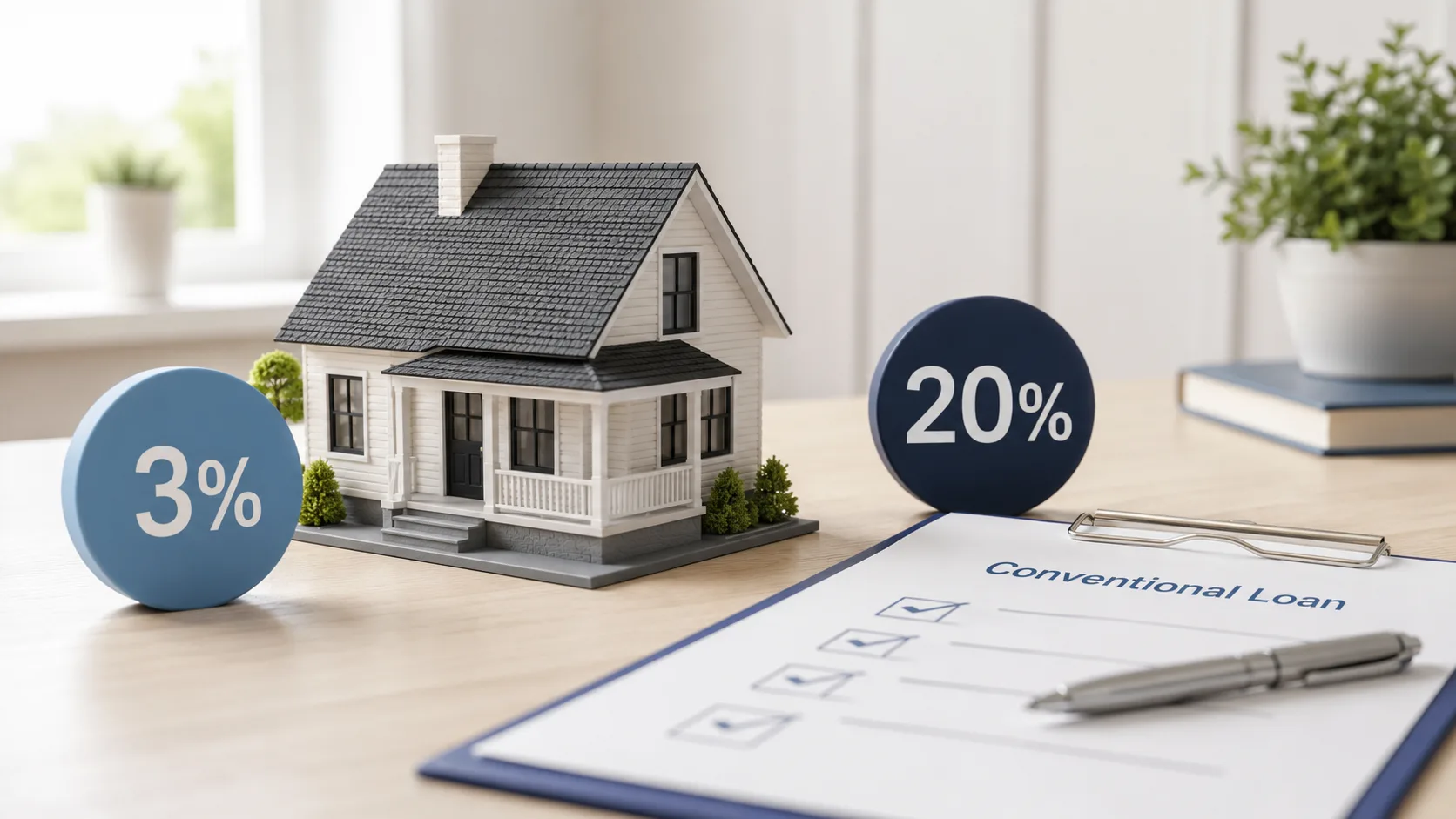
Conventional loan down payment options can vary based on buyer profile, loan type, and current guidelines.
Quick answer: Some qualified conventional loan buyers may be eligible for low down payment options, including programs that may allow as little as 3 percent down. However, 20 percent down can still matter because it may help avoid PMI and lower monthly housing costs. Final eligibility depends on underwriting, documentation, property details, and lender guidelines.
What Is A Conventional Loan Down Payment?
A conventional loan down payment is the buyer’s upfront contribution toward the purchase price of a home. For example, if a buyer brings part of the purchase price from verified funds and finances the rest with a mortgage, that upfront contribution is the down payment.
A conventional loan is different from a government-backed FHA, VA, or USDA loan because it is not insured or guaranteed by those government programs. The CFPB gives a simple explanation of what a conventional loan is and how it differs from other mortgage types.
The down payment is not the same thing as closing costs. Your down payment reduces the amount you borrow, while closing costs are the fees and prepaid expenses needed to complete the mortgage and property purchase.
Conventional loans may be conforming or non-conforming. Conforming conventional loans generally follow Fannie Mae and Freddie Mac guidelines, while non-conforming loans may have different rules. Buyers should review conventional loan options with a mortgage professional before choosing a down payment strategy.
Review Your Conventional Loan Options
Do You Need 20 Percent Down For A Conventional Loan?
No, not every buyer needs 20 percent down for a conventional loan. Some qualified buyers may be eligible for lower down payment options, depending on the loan program, occupancy, credit profile, income, assets, property type, and underwriting approval.
That said, 20 percent down can still be valuable. A larger down payment may reduce the loan amount, lower the monthly payment, and help some buyers avoid private mortgage insurance.
Some affordable conventional programs may allow lower down payments for eligible borrowers. Fannie Mae describes HomeReady mortgage options, and Freddie Mac describes Home Possible mortgage options that may support qualified low down payment buyers.
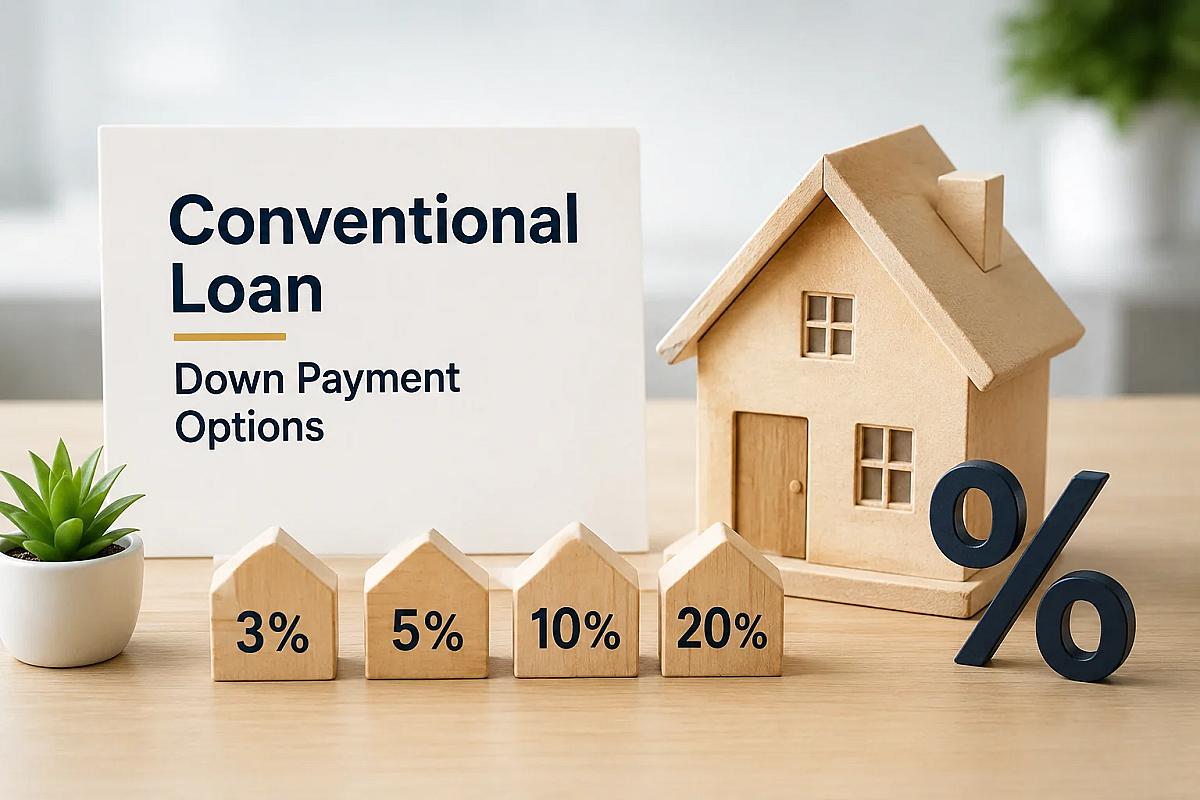
A 3 percent down option may help some buyers move sooner, but it is not automatic for every borrower. A 5 percent down option may provide more flexibility for some profiles. A 10 percent down option may reduce PMI pressure compared with a smaller down payment. A 20 percent down option may help avoid PMI, but it requires more upfront cash.
The best choice depends on your full mortgage profile, not just the smallest allowed percentage. A buyer with strong credit and stable income may have different choices than a buyer who needs more flexibility, gift funds, or down payment assistance.
How Do Conventional Loan Down Payment Options Compare?
Conventional loan down payment options should be compared by timing, cash available, monthly payment comfort, PMI impact, emergency savings, and long-term goals. The lowest upfront amount is not always the best financial fit.
Down Payment Option | Best Fit | Key Consideration |
|---|---|---|
3 percent down | Some qualified first-time or eligible buyers with limited savings | PMI may apply, and eligibility must be verified |
5 percent down | Buyers who want a lower upfront cost with more flexibility than 3 percent | PMI may still apply, but cash to close may be easier than 10 or 20 percent |
10 percent down | Buyers who want to reduce the loan amount while keeping some cash available | May lower monthly cost compared with smaller down payments |
20 percent down | Buyers with stronger savings who want to avoid PMI when possible | Requires more cash upfront and may delay buying for some borrowers |
The timing of your purchase matters. Saving longer may help you bring more money down, but buying sooner with a lower down payment may be useful when you are financially ready and want to stop waiting.
Buyers should also verify current conforming loan limits. FHFA provides conforming loan limit information, and limits can vary by year and county.
How Does PMI Affect A Conventional Loan Down Payment?
Private mortgage insurance, often called PMI, may apply when a conventional loan down payment is below 20 percent. PMI is designed to protect the lender if the borrower stops making payments, not to protect the borrower directly.
The CFPB explains private mortgage insurance and how it can affect a mortgage payment. The CFPB also provides a broader guide to how mortgage insurance works.
A lower down payment may help a buyer purchase sooner, but PMI can increase the monthly housing cost. A larger down payment may reduce or remove PMI exposure, but it can also use more of the buyer’s savings.
PMI cost, cancellation timing, and removal rules should be reviewed with the lender or loan servicer. Do not rely on old online advice because PMI rules, lender overlays, and loan program details can change.
How Is A Conventional Loan Down Payment Different From FHA, VA, And USDA?
A conventional loan down payment works differently from FHA, VA, and USDA loan options. Each loan type has its own purpose, eligibility rules, mortgage insurance structure, property requirements, and buyer fit.
An FHA loan may offer a low down payment path for some qualified buyers, but FHA mortgage insurance rules are different from conventional PMI. Buyers comparing low down payment options may also find this guide to understanding FHA loans with low down payment helpful.
A VA loan may offer no down payment options for eligible veterans, service members, and certain qualified borrowers. A USDA loan may offer no down payment options for eligible rural or qualifying area properties and qualified borrowers.
HUD provides a general overview of loan programs and housing resources that may help buyers understand government-backed options. Conventional loans may be attractive for buyers with stronger credit, stable income, and enough funds for down payment and closing costs.
The right comparison should look at date, loan type, buyer profile, property location, credit, income, loan limits, mortgage insurance, and long-term affordability. A conventional loan is not automatically better than FHA, VA, or USDA, and those options are not automatically better than conventional.
Start Your Mortgage Pre Approval Review
Can First Time Buyers Use A Low Conventional Loan Down Payment?
Some first-time buyers may qualify for a low conventional loan down payment. This can be helpful for buyers who have steady income and acceptable credit but have not saved 20 percent.
First-time buyers should look beyond the down payment. They may need to review credit, debt-to-income ratio, income documents, bank statements, gift fund rules, closing costs, reserves, and monthly payment comfort.
Oklahoma and Tulsa buyers can also review first-time buyer preparation steps in this first-time home buyer in Oklahoma resource. Program rules can change, so first-time buyer eligibility should be checked with current guidelines before applying.
Can Gift Funds Or Down Payment Assistance Help With A Conventional Loan?
Some conventional loan programs may allow gift funds, subject to documentation and underwriting rules. Gift funds usually need to come from an acceptable source, and the lender may require a gift letter and proof of transfer.
Down payment assistance may also help some qualified buyers. Assistance can vary by location, income, property type, funding availability, lender participation, and program timing.
Buyers may see different types of funds used in a mortgage transaction:
Personal savings from verified bank accounts
Gift funds from an acceptable donor
Grant assistance that may not require repayment
Forgivable assistance that may require occupancy or time conditions
Repayable assistance that may act like a second loan
Seller credits that may help with allowable closing costs
Assistance does not always cover every cash-to-close requirement. Buyers should verify whether assistance can be used for down payment, closing costs, prepaid items, or only certain approved expenses.
How Should Buyers Compare Down Payment And Closing Costs?
Down payment and closing costs are different parts of the buying budget. The down payment goes toward the purchase price, while closing costs cover services, fees, and prepaid items required to complete the transaction.
Cash to close is the total amount a buyer usually needs to bring to the closing table after credits, deposits, lender requirements, and verified funds are calculated. This may include down payment, lender fees, title fees, appraisal, prepaid taxes, homeowners insurance, escrow setup, and other allowable costs.
Buyers should ask for a Loan Estimate and compare the total cash needed, not only the down payment. A buyer choosing 3 percent down may still need additional funds for closing costs unless seller credits, gift funds, assistance, or other approved sources help cover part of the amount.
What Should You Check Before Choosing A Conventional Loan Down Payment?
Choosing a conventional loan down payment should be based on your full mortgage profile. The right answer can change depending on the date, loan program, property type, and current lender guidelines.
Before choosing your down payment amount, review:
Credit profile
Income stability
Debt-to-income ratio
Purchase price
Property type
Occupancy
Loan amount
Conforming loan limit
Down payment source
Closing costs
PMI
Cash reserves
Gift fund documentation
Assistance program rules
Monthly payment comfort
Long-term goals
Current guideline verification
Fannie Mae also provides loan limit information that can help buyers understand why year and county matter when reviewing conventional loan options.
A lower down payment can help some buyers move sooner, but the right choice should balance upfront cash, PMI, monthly payment, emergency savings, and long-term affordability.
When Should You Talk To A Mortgage Loan Officer?
You should talk to a mortgage loan officer before assuming you need 20 percent down or before choosing a down payment based on online examples. A mortgage professional can review your credit, income, assets, goals, purchase timeline, and possible loan options.
A loan officer can also help compare conventional, FHA, VA, USDA, and assistance options based on your actual profile. This matters because the best option for one buyer may not be the best option for another buyer.
Buyers can verify mortgage professional licensing through NMLS Consumer Access. Madrid Mortgage Team can help Oklahoma buyers understand down payment options, prepare for pre-approval, and review conventional loan possibilities without relying on guesswork.
Talk About Your Conventional Loan Options
What Questions Do Buyers Ask About Conventional Loan Down Payments?
What Is The Minimum Down Payment For A Conventional Loan?
Some qualified buyers may be eligible for low down payment conventional options, including programs that may allow as little as 3 percent down. Eligibility depends on the loan program, borrower profile, property type, underwriting, and current lender guidelines.
Do I Need 20 Percent Down For A Conventional Loan?
No, 20 percent down is not always required. However, 20 percent down may help some buyers avoid PMI and reduce the monthly payment, so it should be compared with lower down payment options.
Can First Time Buyers Get A Conventional Loan With A Low Down Payment?
Some first-time buyers may qualify for low down payment conventional programs. Buyers should verify current program rules, income limits if applicable, credit requirements, property requirements, and documentation needs.
Does A Conventional Loan Require PMI?
PMI may apply when the conventional loan down payment is below 20 percent. PMI costs and cancellation rules can vary, so buyers should review the details with their lender before choosing a loan option.
Can Gift Funds Be Used For A Conventional Loan Down Payment?
Gift funds may be allowed for some conventional loan transactions, subject to program rules and documentation. Buyers should confirm acceptable donors, gift letter requirements, and transfer documentation with the lender.
Is Conventional Better Than FHA For Down Payment?
Conventional is not automatically better than FHA. The better choice depends on credit, income, available funds, PMI or mortgage insurance, property type, long-term goals, and current program guidelines.
Last Updated: 11th July 2026
Reviewed By: Alfredo Madrid , NMLS #266006