FHA vs Conventional Loan guide for serious buyers. Compare credit, down payment, PMI, MIP, and costs, then start your pre approval today.
Many Tulsa-area buyers ask the same question before applying for a mortgage: should I choose FHA or conventional financing? The answer depends on more than one feature, such as down payment, credit score, mortgage insurance, closing costs, property type, and long-term affordability.
FHA vs Conventional Loan comparisons are helpful because both loan types can support homeownership, but they work differently. FHA loans are insured by the Federal Housing Administration, while conventional loans are not insured by FHA, VA, or USDA and often follow Fannie Mae or Freddie Mac guidelines.
This guide explains FHA eligibility, conventional loan eligibility, credit score, down payment, FHA MIP, conventional PMI, debt-to-income ratio, closing costs, Loan Estimate review, appraisal requirements, first-time buyer considerations, and pre approval.
FHA or conventional loan eligibility, approval, rates, payments, savings, mortgage insurance, closing costs, and final loan terms are not guaranteed. Final terms depend on credit, income, debt, assets, down payment, property value, loan program rules, lender requirements, market conditions, appraisal, title review, and underwriting.
What Is the Difference Between FHA and Conventional Loans?
An FHA vs Conventional Loan comparison starts with insurance and guidelines. FHA loans are insured by the Federal Housing Administration, while conventional loans are not government-insured and often follow Fannie Mae or Freddie Mac rules. The better option depends on the borrower’s credit, income, down payment, property, and goals.
How Does an FHA vs Conventional Loan Comparison Work?
FHA and conventional loans are two of the most common mortgage options for home buyers. Both can help qualified buyers purchase a primary residence, but they are reviewed differently by lenders.
FHA loans are insured by the Federal Housing Administration. Because of that insurance, FHA may be worth reviewing for buyers who need more flexibility around credit, down payment, or past financial challenges, subject to FHA and lender requirements.
Conventional loans are not insured by FHA, VA, or USDA. Many conventional loans follow Fannie Mae or Freddie Mac requirements, and they may be worth reviewing for buyers with stronger credit, larger down payments, or broader property goals.
For buyers in Tulsa, Broken Arrow, Bixby, Jenks, Owasso, Sand Springs, Claremore, Glenpool, Sapulpa, Coweta, Wagoner, Collinsville, Skiatook, Edmond, Norman, Moore, Yukon, Mustang, and surrounding Oklahoma markets, the best loan depends on the full borrower profile.
A mortgage professional can help compare FHA MIP, conventional PMI, down payment funds, cash to close, monthly payment, closing costs, and Loan Estimate details before you choose a loan path.
If you are comparing FHA and conventional financing, a personalized review can help you avoid choosing a loan based on one feature only. A local mortgage professional can help you compare the numbers and decide which option may fit your goals.
Compare FHA and Conventional Options
Who Should Compare FHA and Conventional Loans?
First-time home buyers often compare FHA and conventional loans because both options may offer low down payment paths for qualified borrowers. Buyers with limited savings, improving credit, or questions about mortgage insurance should review both options before deciding.
FHA may be worth reviewing for buyers who need more credit flexibility or want to understand FHA down payment options. HUD provides general FHA loan information for borrowers who want to understand how FHA-insured loans work.
Conventional may be worth reviewing for buyers with stronger credit, larger down payments, or long-term PMI goals. Conventional loans may also offer broader options for certain property or occupancy situations, depending on program rules.
Buyers who are purchasing a primary residence, comparing seller concessions, or planning future refinancing should also compare both loan types. If you are buying your first home, Madrid Mortgage Team’s first-time home buyer guidance can help you understand the bigger picture before applying.
What Are the Main FHA vs Conventional Loan Requirements?
FHA and conventional loans both review credit, income, assets, debts, property, and underwriting. The difference is how each program weighs those factors and what rules apply.
Loan Factor | FHA Loan | Conventional Loan |
|---|---|---|
Government insurance | Insured by the Federal Housing Administration. | Not insured by FHA, VA, or USDA. |
Credit flexibility | May offer more flexibility for some qualified buyers. | Often depends strongly on credit score and full credit profile. |
Down payment | Known for low down payment options for qualified borrowers. | May also offer low down payment options for qualified buyers. |
Mortgage insurance | Usually includes FHA mortgage insurance premium. | May require PMI when down payment is below 20%. |
Property type | Usually focused on primary residence financing. | May offer broader property and occupancy options. |
Appraisal | Uses FHA appraisal and property standards. | Uses conventional appraisal and investor guidelines. |
Loan limits | Subject to FHA loan limits. | Conforming loans are subject to conforming loan limits. |
Common borrower fit | May fit buyers needing flexibility. | May fit buyers with stronger credit or PMI goals. |
Best next step | Compare with a Loan Estimate and pre approval review. | Compare with a Loan Estimate and pre approval review. |
Requirements can change and may vary by program, lender, property, borrower profile, and underwriting findings. Buyers should confirm current guidelines before choosing a loan type.
How Do Credit Score Rules Differ for FHA and Conventional Loans?
Credit score is one of the biggest reasons buyers compare FHA and conventional loans. FHA may be considered by buyers who need more credit flexibility, subject to FHA and lender requirements.
HUD’s Basic Home Mortgage Loan 203(b) page explains that borrowers must meet FHA credit qualifications and that FHA financing may allow a low down payment for eligible borrowers.
Conventional loans often depend heavily on credit score, credit history, automated underwriting, and pricing. Fannie Mae provides guidance on credit score requirements, but lender requirements can still vary.
A higher credit score may help with conventional loan pricing, PMI options, and available loan structures. However, credit score alone does not guarantee approval for either FHA or conventional financing.
Lenders also review payment history, income, debt, assets, property, down payment source, and underwriting findings. Before applying, buyers can review their credit reports through AnnualCreditReport.com to check for errors or outdated information.

How Do Down Payment and Mortgage Insurance Compare?
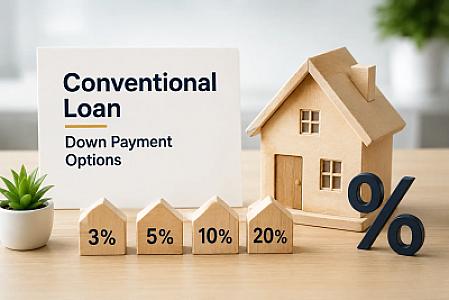
FHA loans are commonly known for low down payment options for qualified borrowers. Conventional loans may also offer low down payment options for qualified buyers, depending on the borrower’s credit, income, property, and program rules.
FHA mortgage insurance usually includes upfront mortgage insurance premium and annual mortgage insurance premium, depending on current rules. HUD provides official FHA mortgage insurance premium information for borrowers who want to understand MIP structure.
Conventional loans may require private mortgage insurance when the down payment is below 20%. Fannie Mae explains private mortgage insurance information, and Freddie Mac provides helpful down payment and PMI information.
PMI may be cancellable if requirements are met, but cancellation should not be treated as automatic in every case. FHA MIP and conventional PMI should be compared based on monthly payment, cash to close, loan amount, down payment, credit score, loan term, and long-term goals.
The best choice is not always the loan with the lowest down payment. Buyers should compare total loan cost, monthly comfort, mortgage insurance, and long-term plans.
How Do DTI, Income, and Closing Costs Affect the Choice?
Both FHA and conventional loans review income, employment, monthly debts, and ability to repay. Debt-to-income ratio, often called DTI, compares monthly debt obligations with qualifying income.
Conventional underwriting may use Fannie Mae or Freddie Mac rules depending on the loan. Fannie Mae’s debt-to-income ratio guidance can help buyers understand how DTI is reviewed in conventional underwriting.
FHA underwriting follows FHA and lender requirements. FHA may be worth reviewing for buyers with certain credit or down payment needs, while conventional may be worth reviewing for buyers with stronger credit or different long-term cost goals.
Closing costs can vary by loan type, lender, property, prepaid items, title fees, insurance, taxes, and loan structure. Seller credits may help in some cases, subject to program rules and contract details.
The CFPB’s Loan Estimate explainer shows why buyers should review estimated loan terms, projected payment, and closing costs before choosing.
If you are comparing FHA and conventional loan costs, a local review can help you compare more than the interest rate. You can review cash to close, mortgage insurance, payment structure, and long-term goals before making a decision.
Compare FHA and Conventional Options
How Do Appraisal and Property Requirements Differ?
FHA loans have FHA appraisal and property standards. FHA properties usually need to meet safety, soundness, and security expectations under program rules.
Conventional loans also require property review, but property standards and appraisal rules can differ. Property condition, occupancy, repairs, marketability, and loan type can affect both loan options.
FHA may be more focused on primary residence financing. Conventional loans may offer broader property and occupancy options, such as certain second home or investment property financing, depending on borrower and program rules.
Buyers should not assume a property qualifies before appraisal and underwriting review. HUD’s Federal Housing Administration resources can help buyers review broader FHA program information, but a lender must still review the actual property and file.

Is FHA or Conventional Better for First-Time Home Buyers?
First-time buyers should compare both FHA and conventional loans before choosing. FHA may be helpful for buyers who need more flexible credit or down payment options, while conventional may be helpful for buyers with stronger credit or long-term PMI goals.
The best choice depends on credit, down payment, income, debts, property, monthly budget, cash to close, and long-term goals. Buyers should not assume every first-time buyer automatically needs FHA.
Buyers also should not assume conventional is automatically cheaper. A mortgage professional can help compare FHA loan options, conventional loan options, mortgage pre approval, and broader home loan programs.
What Mistakes Should Buyers Avoid When Comparing FHA and Conventional Loans?
FHA and conventional loans should be compared carefully. Many buyers make the mistake of choosing based on one feature instead of the full loan structure.
Assuming FHA is always easier
Assuming conventional is always cheaper
Comparing only the interest rate
Ignoring FHA MIP
Ignoring conventional PMI
Ignoring cash to close
Ignoring closing costs
Assuming 20% down is always required for conventional loans
Assuming a low down payment means the lowest total cost
Not reviewing the Loan Estimate
Not comparing property requirements
Not checking credit before applying
Choosing a loan before getting pre approved
Not asking how FHA and conventional compare with VA, USDA, or down payment assistance
Buyers should compare FHA and conventional loans based on total fit, not just one feature like down payment, credit score, PMI, MIP, or interest rate. The better loan is the one that fits the full financial profile and homeownership plan.
What Real-Life FHA vs Conventional Loan Scenarios Can Tulsa Buyers Learn From?
Could a Tulsa First-Time Buyer Compare FHA and Conventional With Limited Savings?
A Tulsa first-time buyer may have limited savings and want to compare low down payment options. In this hypothetical example, the buyer should compare FHA MIP, conventional PMI, credit profile, cash to close, and monthly comfort before choosing.
This example does not guarantee approval, savings, or a specific payment. Final results depend on credit, income, debt, assets, property, appraisal, market conditions, and underwriting.
Could a Broken Arrow Buyer With Strong Credit Compare PMI and Long-Term Cost?
A Broken Arrow buyer with stronger credit may want to compare conventional PMI with FHA MIP. Conventional may be worth reviewing, but the final decision should include closing costs, down payment, payment structure, and long-term plans.
This example is educational only. A buyer should compare actual Loan Estimates before deciding whether FHA or conventional financing fits better.
Could an Owasso Buyer Compare FHA, Conventional, VA, and USDA Before Pre Approval?
An Owasso buyer may be eligible for more than one loan option. FHA, conventional, VA, and USDA financing can have different rules for eligibility, property type, income, down payment, mortgage insurance, and closing costs.
The buyer should compare all relevant options before house hunting too far into the process. A pre approval review can help narrow the loan path and avoid surprises after making an offer.
How Should Buyers Prepare Before Choosing FHA or Conventional Financing?
Preparing for an FHA vs conventional loan review starts with gathering the information a lender needs. This helps buyers compare options based on real numbers instead of guesses.
Helpful items to review include:
Credit score and credit history
Income documents and employment history
Monthly debts and debt-to-income ratio
Down payment funds and possible gift funds
Cash-to-close expectations
Property type and occupancy plans
FHA MIP and conventional PMI
Loan limits and closing costs
Loan Estimate details
Long-term affordability and pre approval timing
Some buyers may also want to compare VA loan options or USDA loan options if they may qualify. Comparing multiple options can help buyers avoid assuming FHA or conventional is the only path.
If you are close to buying, reviewing both FHA and conventional financing before making an offer can help you move forward with more confidence. A mortgage professional can compare credit, payment, mortgage insurance, cash to close, and long-term fit.
Compare FHA and Conventional Options
What Questions Do Tulsa Buyers Ask About FHA vs Conventional Loans?
What Is the Main Difference Between FHA and Conventional Loans?
The main difference is that FHA loans are insured by the Federal Housing Administration, while conventional loans are not government-insured and often follow Fannie Mae or Freddie Mac rules. The better option depends on the borrower’s full profile.
Is FHA Easier to Qualify for Than Conventional?
FHA may offer more flexibility for some qualified buyers, especially around credit or down payment. However, approval is not guaranteed, and lenders still review income, debts, assets, property, and underwriting findings.
Does FHA or Conventional Require a Lower Down Payment?
Both FHA and conventional loans may offer low down payment options for qualified buyers. The best choice depends on credit, income, cash to close, property type, mortgage insurance, and loan program rules.
Which Loan Has Better Mortgage Insurance?
Neither option is automatically better for every buyer. FHA uses mortgage insurance premium, while conventional loans may use PMI when down payment is below 20%. Buyers should compare the total cost and long-term plan.
Is Conventional Cheaper Than FHA?
Conventional can be cheaper for some buyers, especially with stronger credit or larger down payments, but that is not always true. FHA may fit other buyers better depending on credit, income, debt, and cash available.
Is FHA Better for First-Time Home Buyers?
FHA can be helpful for some first-time buyers, but it is not automatically the best choice. First-time buyers should compare FHA, conventional, VA, USDA, and assistance options before choosing.
Can I Switch From FHA to Conventional Later?
Some homeowners may refinance from FHA to conventional later if they qualify. The decision depends on credit, equity, rates, closing costs, mortgage insurance, and current refinance guidelines.
Should I Get Pre Approved Before Choosing FHA or Conventional?
Yes. Pre approval can help you compare FHA and conventional options using your credit, income, debts, assets, down payment, and property goals. Final approval still depends on appraisal, title review, and underwriting.
What Should Buyers Know Before Relying on This FHA vs Conventional Loan Guide?
FHA vs Conventional Loan information is educational only and should be reviewed for accuracy by a licensed mortgage professional before publishing or relying on it for a loan decision.
FHA or conventional financing does not guarantee approval, lower payment, lower mortgage insurance, savings, lower rate, lower closing costs, PMI cancellation, or final loan terms. Loan approval depends on credit, income, debt, assets, down payment, property value, loan program rules, lender requirements, appraisal, title review, and underwriting.
Information may change, so buyers should confirm current FHA guidelines, conventional loan guidelines, PMI rules, MIP rules, closing costs, and program requirements.
Last Updated: 4th June 2026
Reviewed By: Alfredo Madrid , NMLS #266006